Preparing for physician training
From engineering systems to caring for patients.
I am a mechanical engineer in organ preservation and human spaceflight. Transplant support, community health work, and shadowing led me toward direct patient care and medical training.
Selected experience
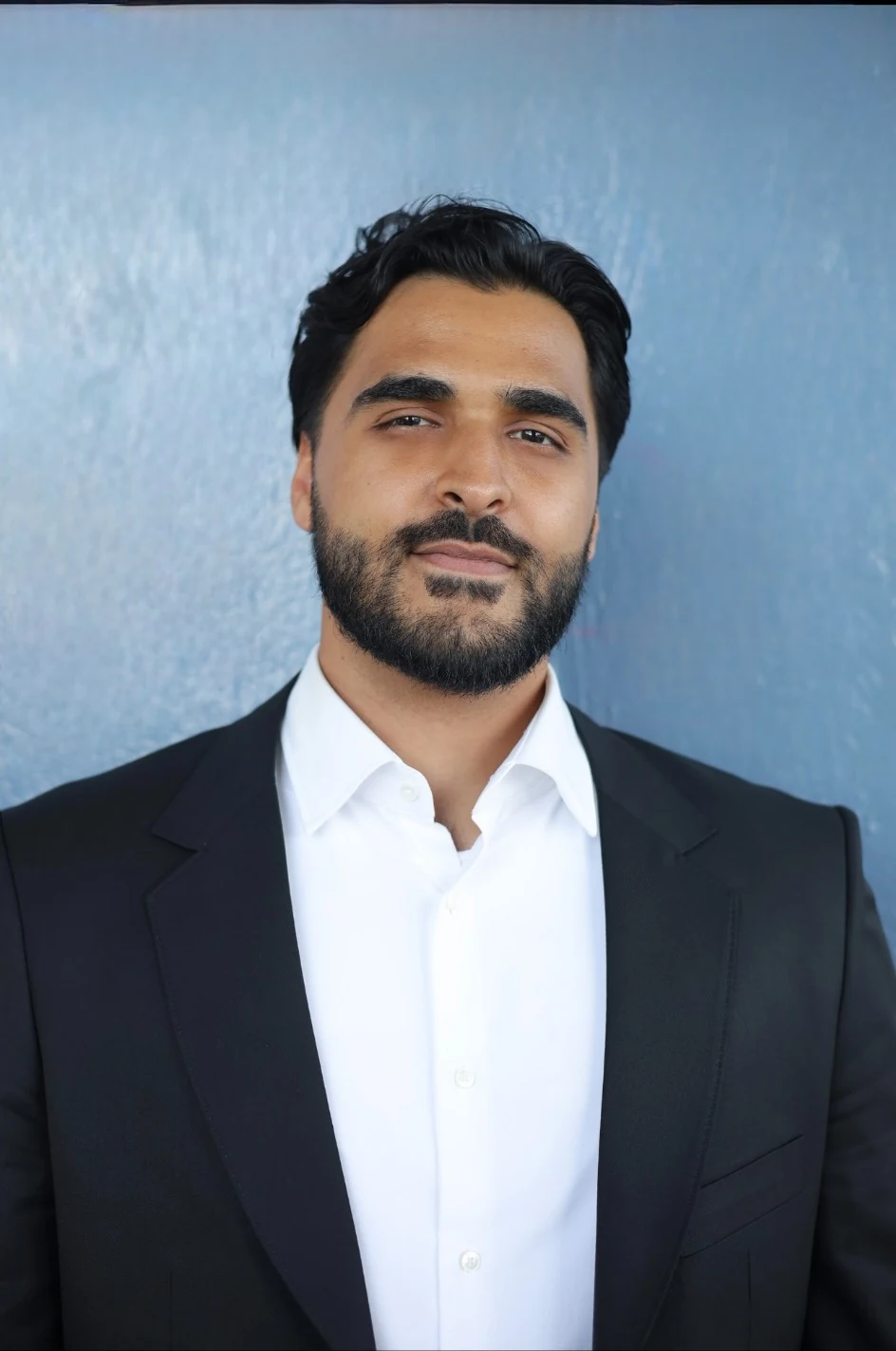
Waleed Syed Faizi
Preparing to become a physician Mechanical Product Engineer · OrganOx Lead Fluid and Thermal Design Engineer · Blue OriginCURRENT WORKORGAN PRESERVATION
NEXT STEPMEDICAL TRAINING
01 / Why Medicine
I want the training and responsibility to understand the patient’s full clinical picture and help guide their care.
Family illness introduced me to medicine through uncertainty, communication barriers, and the work of navigating care. Engineering trained me to trace failures, test assumptions, and make decisions when small errors could affect an entire system.
Clinical work brought those habits beside patients and physicians. I want to care for patients directly and let long-term relationships shape the questions I study and the tools I build.
02 / Clinical Immersion
Clinical work clarified the responsibility I want to carry.
These experiences made medicine daily work involving patients, clinicians, devices, and time-sensitive decisions.
OrganOx · Transplant medicine
Supporting a liver perfusion system brought me close to clinical decision-making.
At OrganOx, I work in mechanical product engineering and serve as a backup liver perfusion support specialist. During transplant cases, I monitor device behavior, support the system, and respond to technical issues around perfusion.
Physicians interpret that data within the patient’s condition, respond when physiology shifts, and guide care beyond the device. Working near those decisions made me want direct patient responsibility.
Research and public context
OrganOx platform ↗
Clinical evidence ↗
ELC Phase 1 study ↗
Financial Times ↗
Clinical settings
Different settings showed me how physicians build judgment over time.
Community screening, outpatient care, dermatology, oncology, and transplant medicine revealed how physicians listen, interpret incomplete information, communicate risk, and help patients act.
Weill Cornell Medicine · Heart-to-Heart
Outreach showed how access shapes the care a patient receives.
I joined mobile screening and health education events across New York City. Privacy, cost, insurance gaps, and follow-through shaped whether information became useful care.
The work reinforced that a physician must understand the circumstances surrounding a clinical recommendation.
Outpatient medicine
Best Medical Care, PC
Outpatient shadowing showed chronic disease follow-up, medication review, preventive counseling, and repeated conversations over time.
Continuity allows a physician to understand how a patient’s life changes the plan.
Dermatology and Mohs surgery
Dermatology Institute of Detroit
Shadowing Dr. Abraham Abdelhak showed how counseling, procedural precision, and practical problem-solving can fit within one clinic day.
A repeated patient difficulty in that clinic later became the starting point for Solar Rolar.
Oncology
Karmanos Cancer Institute
I observed cancer consultations where fragmented records, prior treatment, and uncertainty complicated the next decision.
Serious illness requires clinical interpretation and communication that helps a patient understand what remains possible.
03 / Community Service
Community service taught me to work within the reality people are living.
Continuity, access, and trust determine whether support reaches people.
04 / Engineering as Preparation
Engineering taught me to carry responsibility when failure has consequences.
Safety-critical hardware taught me to reason through incomplete information, communicate clearly, and reassess when results challenge the plan.
At Blue Origin, I led fluid and thermal design work for lunar lander systems supporting NASA’s Artemis program. I designed and tested heaters, sensors, fluid hardware, and mechanical interfaces while coordinating across analysis, manufacturing, suppliers, and vehicle teams.
The work demanded detailed preparation, clear communication, and accountability when a missed assumption could affect an entire system. Those habits will shape how I approach clinical uncertainty and patient safety.
Blue Origin · Human spaceflight
Lunar systems made accountability concrete.
Across design reviews, supplier coordination, analysis, and test support, I had to track how each component affected vehicle-level performance. The work moved from assumptions on paper to measured behavior in hardware.
Failure demanded an honest investigation, protection of the team, and changes carried into the next design and test.
Public program context
NASA · MK1 vacuum test ↗
Blue Moon MK1 ↗
NYT · Artemis III ↗
NYT · mission coverage ↗
Training path
A progression toward direct patient care.
05 / Innovation Shaped by Clinical Need
The strongest projects begin with a specific human need.
Clinical observation defines the problem. Engineering provides a disciplined way to test a solution and understand its risks.
Research and public context




Solar Rolar · Physician-led innovation
A repeated clinic problem became a practical device concept.
A Mohs surgeon described patients struggling to apply sunscreen to difficult-to-reach areas. We turned that limitation into a handheld applicator, prototypes, and a provisional patent.
The project showed how patient relationships reveal problems that a technical workspace can miss. I want those relationships to guide the questions I pursue.
06 / Personal Interests and Field Notes
Observation, preparation, and perspective outside work.
Mountaineering, astronomy, scuba, architecture, and travel photography provide other settings to practice patience, judgment, and close observation.
Mountaineering
Preparation preserves options when conditions change.
Winter approaches, glacier travel, and rope-team climbs taught me to communicate early, monitor changing conditions, and keep enough margin for the descent.
The value of the climb is the judgment practiced along the route.
Astronomy
Attention changes what becomes visible.
I photograph the night sky and lead family astronomy activities with sky maps. On a flight from Detroit to Newark, a faint red band beyond the wing became an aurora observation.
Astronomy rewards patience and the willingness to look again.
Scuba
Calm depends on awareness of the full environment.
Diving in the Red Sea taught me to control breathing, track depth and air, use hand signals, and stay oriented when ordinary cues disappear.
Small errors accumulate quickly underwater, so attention must stay distributed across equipment, surroundings, and the people beside me.
Architecture and travel photography
Built environments record choices about scale, function, and public life.
I photograph how geometry, light, craft, and structure shape a place. Travel lets me compare Nabataean façades, Roman civic spaces, Ottoman design, and working university buildings.
The field notes remain focused on architecture, history, and technical choices.
07 / Why Medicine, Why Now
Medical training is the next step because I want to care for patients directly.
Engineering taught me disciplined problem-solving. Clinical work showed me which problems I want to carry responsibility for.
I want to make decisions under uncertainty, guide patients through serious illness, and understand the full clinical picture over time. Those relationships should also shape the solutions I study and build.
Becoming a physician gives me the training and responsibility required to do that work.
08 / Contact
Connect about medicine, clinical research, or patient-centered technology.
My current work centers on organ preservation, clinical engineering, and preparation for medical training.